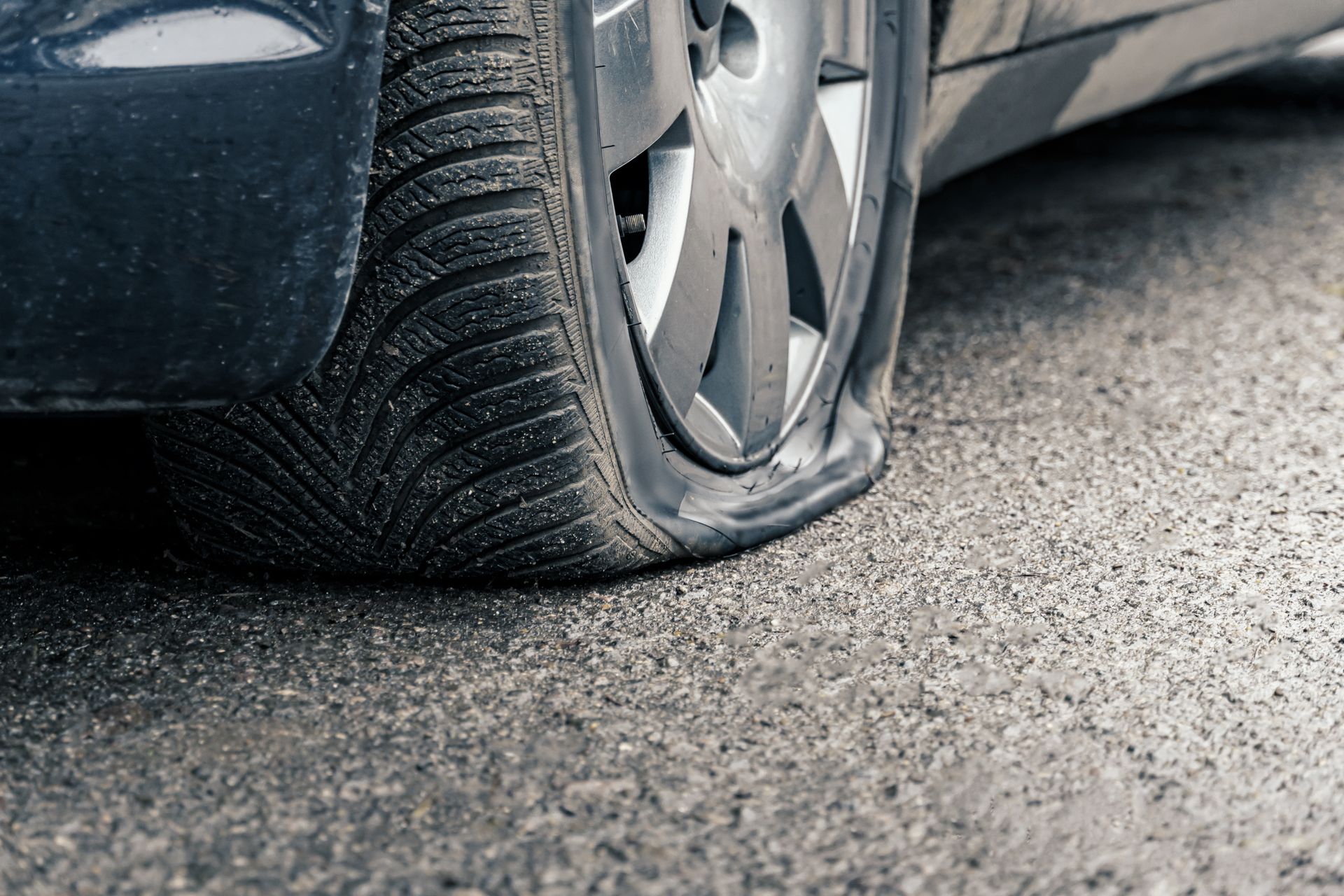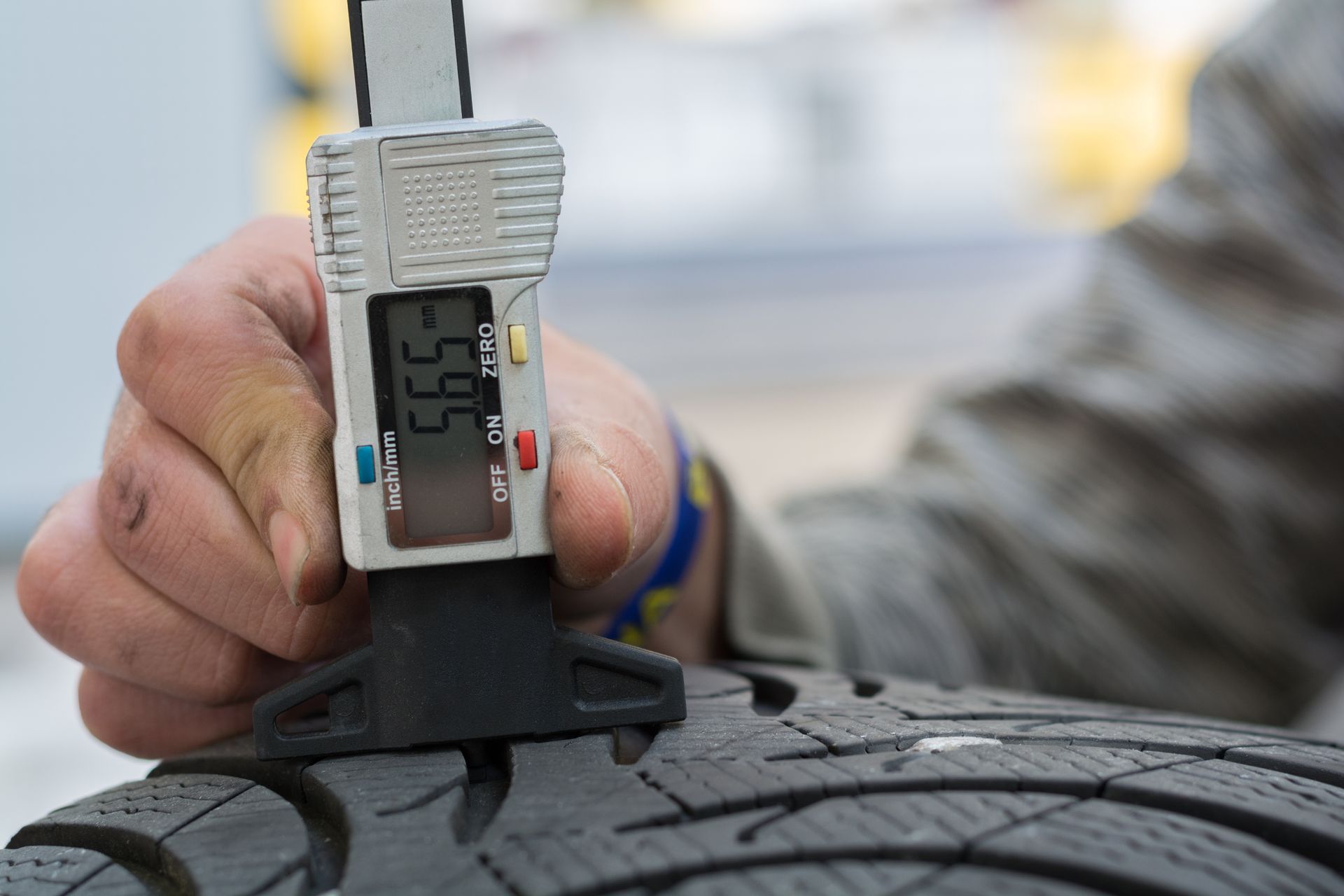
The front tires look ready for replacement, but the rear pair still has plenty of tread. You haven't been spinning the tires or driving particularly hard.
An even difference between front and rear is one situation. A bald inside shoulder, a sawtooth feel across the tread, or one front tire wearing much faster than its partner is another. Those patterns help separate the work the front tires normally do from a problem that will wear out the next set, too.
The Front Tires Have Several Jobs at Once
On many cars, the front tires carry a substantial share of the vehicle's weight, steer, and handle increased load during braking. Front-wheel-drive models also use them to pull the car forward. Acceleration, turning, and stopping all work the same two contact patches. That can leave the front pair wearing faster even without a mechanical fault.
The pattern isn't universal. A powerful rear-wheel-drive vehicle can wear its rear tires faster, and vehicle weight distribution changes the comparison. Rather than set a fixed front-to-rear wear ratio, compare remaining tread, driving use, and rotation history. An even reduction across both front tires is more consistent with normal use than a narrow strip worn nearly bare.
Cornering Wears the Shoulders Differently
Repeated turns place extra load on the tires' shoulders. A commute with tight ramps, frequent intersections, and parking maneuvers asks more of the front tread than steady highway travel. Taking those turns quickly adds to the load. You don't need to hear tire squeal for the shoulders to be working hard.
Even then, pronounced wear on one edge shouldn't be dismissed as driving style. Low pressure, alignment, and worn suspension parts can produce overlapping patterns. At our shop, we measure across the tread width rather than judge the tire by its best-looking groove. The inside shoulder can be worn out while the outside still looks usable.
Pressure Checks Need the Vehicle's Numbers
Underinflated tires flex more and can wear their shoulders excessively. Check pressure before driving, using the specification on the vehicle label for the installed approved tire setup. The maximum pressure molded into the sidewall is not the everyday target. Front and rear recommendations aren't necessarily identical, either.
A tire-pressure warning isn't a replacement for a gauge check. Pressure can be wrong without crossing the warning threshold. Record any tire that needs air repeatedly and have the leak found. A slow puncture or leaking valve can keep one front tire underinflated between services, making the wear look like an alignment issue when pressure loss is contributing.
Alignment Wear Is More Than a Steering Pull
Toe describes whether the wheels point slightly inward or outward. Incorrect toe makes tread scrub as the vehicle travels, sometimes leaving edges that feel sharper in one direction than the other. Camber describes wheel tilt and can contribute to inner- or outer-shoulder wear. The car doesn't have to pull for those angles to be wrong.
Compare alignment readings with the vehicle's specifications, not the idea that every wheel should be perfectly vertical. Ride height, previous impact damage, and worn joints can affect the readings. If you can't bring an angle into range, the next step is to find out why, rather than sending the car out with new tires and an unexplained measurement.
Loose Parts Can Change Alignment on the Road
A control arm bushing or tie rod can allow movement as the tire is loaded. The wheel might sit acceptably during a stationary measurement, then shift during braking or over broken pavement. Worn dampers can also contribute to uneven, scalloped tread by failing to control wheel movement adequately.
An inspection should connect the tread pattern with actual looseness, damage, or loss of control. A few surface cracks in rubber don't automatically require a complete suspension overhaul. Conversely, adjusting alignment around a loose joint won't keep the tire positioned correctly. Repair confirmed wear before the final alignment, then check whether the existing tires remain safe to use.
Rotation Helps Normal Wear, Not Mechanical Damage
Moving tires between approved positions can distribute ordinary wear and is part of regular maintenance when the vehicle allows it. The correct pattern depends on tire direction, wheel sizes, and drivetrain requirements. Staggered sizes can prevent front-to-rear rotation, and some arrangements require a different approach than simply moving each wheel to the opposite corner.
Rotation won't restore lost tread or repair an uneven-wear source. Don't move a damaged tire to the rear just to hide it, and don't automatically put the deepest tread at the front. Replacement placement should follow tire and vehicle guidance, including wet-road stability considerations. AWD vehicles also require attention to circumference differences.
Get Tire Wear And Alignment Service In Hesperia, CA, With Mariposa Tire & Auto
Mariposa Tire & Auto in Hesperia, CA, can compare tread wear with pressures, alignment, and suspension condition. Bring any recent tire or alignment records.
Contact us to have the front tire wear checked before another set develops the same pattern.